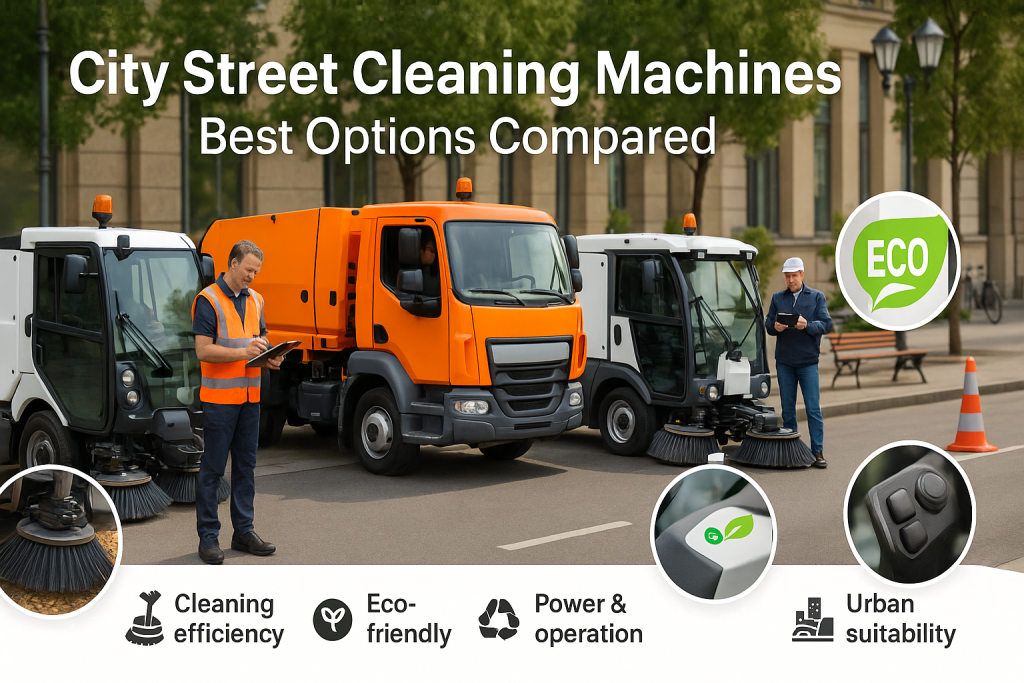
City street cleaning machines are the essential workhorses of urban sanitation. A modern city presents a complex and varied landscape, from wide, multi-lane boulevards to narrow, historic laneways and pedestrian-only plazas. No single machine can effectively clean all these different environments. Therefore, a careful comparison of the available options is a vital process for any public works department aiming to maintain a high standard of cleanliness. This guide provides a detailed comparison of the best options in city street cleaning machines, helping officials understand the different types, technologies, and features to build a capable and efficient fleet.
The most fundamental way to categorize city street cleaning machines is by their size. The size of a sweeper directly dictates its application, determining where it can work most effectively. A well-equipped city will have a diverse fleet with machines of various sizes, ensuring that every street, lane, and square can be properly maintained.
Heavy-duty sweepers are the largest and most powerful city street cleaning machines. They are constructed on a standard commercial truck chassis, which gives them the ability to travel at highway speeds and cover long distances efficiently. These machines are equipped with massive debris hoppers and large water tanks, allowing them to operate for many hours before needing to unload or refill.
Their ideal application is on a city’s main arterial roads, boulevards, and connecting highways. Their wide sweeping path and high operating speed make them incredibly productive in these open, high-speed environments. While they are the champions of large-scale cleaning, their size is also their main limitation. They are too large and cumbersome to operate effectively in the narrow, congested streets of a dense urban core. The right heavy-duty municipal road sweeper is the backbone of any large-scale cleaning operation.
Mid-sized sweepers, often built on a purpose-built chassis rather than a standard truck frame, represent a versatile middle ground. They are smaller and more maneuverable than their heavy-duty counterparts but still offer substantial hopper capacity and powerful cleaning performance. This balance makes them one of the most common types of city street cleaning machines.
These machines are the workhorses of residential neighborhoods, collector streets, and smaller commercial districts. They are agile enough to navigate cul-de-sacs and streets with parked cars, yet large enough to be highly productive. A mid-sized sweeper can handle a wide variety of debris, from leaves and litter to heavier dirt and sand. While they may still be too large for the absolute tightest urban spaces, their versatility makes them an indispensable part of most municipal fleets.
As cities become denser, the need for smaller, more agile cleaning solutions grows. Compact sweepers are specifically designed to meet this need. These machines are characterized by their small physical footprint and an exceptionally tight turning radius, often achieved through articulated steering. They are built to navigate the complex and confined spaces of a modern downtown core.
Their primary application is in historic districts, narrow laneways, and large, complex parking facilities. They can easily maneuver around street furniture, planters, and other obstacles that would be impossible for a larger machine to navigate. The main trade-off for this agility is a smaller hopper capacity, which means the machine will need to make more frequent trips to a disposal site. A compact road sweeper is the specialized tool required for the most challenging urban geometries.
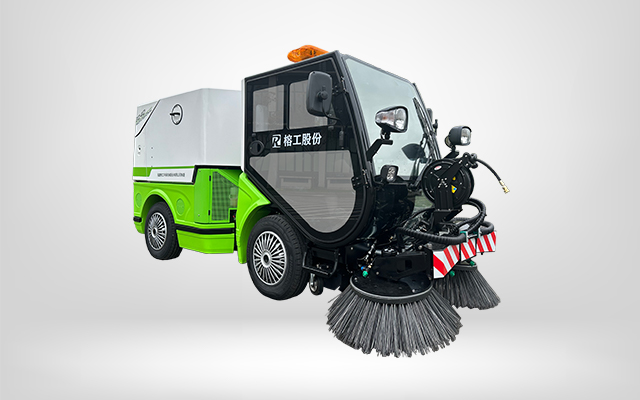
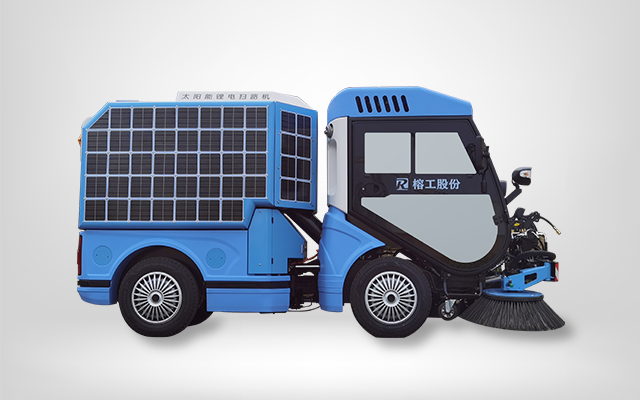
The smallest class of city street cleaning machines is the sub-compact sweeper. These machines are specifically designed to operate safely and unobtrusively in areas with high pedestrian traffic. They are often battery-powered, making them virtually silent and completely emission-free. Their primary purpose is to maintain the cleanliness and appeal of a city’s most important public spaces.
These sweepers are the ideal solution for pedestrian plazas, town squares, farmers’ markets, university campuses, and wide sidewalks. They are designed to work safely alongside people, performing their cleaning function without causing a disturbance. While their debris capacity is limited to lighter litter like paper, cups, and food wrappers, their role in maintaining the quality of a city’s public realm is invaluable.
Beyond size, city street cleaning machines are also defined by the core technology they use to pick up debris. The three main technologies—mechanical, vacuum, and regenerative air—each have distinct strengths and are suited to different types of debris and cleaning challenges.
Mechanical broom sweeping is the oldest and most robust cleaning technology. It is a straightforward and powerful method. A large, rotating cylindrical main broom is positioned underneath the machine. It aggressively throws debris onto a conveyor system, which then carries the material up into the hopper. This direct, physical action makes it exceptionally effective for heavy, dense, and compacted materials.
This technology is the undisputed choice for the toughest cleaning jobs. It is used for post-construction cleanup, removing heavy, packed-down dirt from road edges, and picking up abrasive materials like asphalt millings. When compared to other technologies, it is less efficient at capturing very fine dust, but for heavy-duty applications, its power is unmatched.
Vacuum sweepers are a highly versatile and widely used option. Their operation is similar to a giant vacuum cleaner. Gutter brooms on the sides of the machine funnel debris from the curb line into the path of a large suction nozzle. A powerful fan, driven by an auxiliary engine or a hydraulic system, creates strong suction that lifts the debris and deposits it into the hopper.
Vacuum sweepers are excellent for general-purpose cleaning. They are highly effective at collecting a wide range of common urban debris, including litter, leaves, sand, and loose gravel. Their enclosed system also provides very good control of airborne dust. While they may not have the raw power of a mechanical broom for compacted dirt, their versatility makes them a popular choice for routine cleaning in most urban environments.
Regenerative air technology is the most advanced option for controlling fine dust. Unlike a pure vacuum sweeper that only uses suction, a regenerative air sweeper uses a closed-loop air system. A powerful fan blasts a jet of air onto the pavement across a wide pick-up head. This controlled blast dislodges debris, including very fine particles. This debris is then immediately drawn up into the hopper on the other side of the head.
The air is then “regenerated”—cleaned of debris and dust—and sent back to the blasting side of the system. This creates a highly efficient, dust-free cleaning cycle. This technology offers the best performance for removing fine particulates, making it ideal for air quality-sensitive areas or for cleaning porous pavement surfaces. This development is a key part of the modern history of the Street sweeper.
The choice of power source for city street cleaning machines has significant implications for their performance, operating cost, and environmental impact. The decision between traditional diesel and modern electric power is one of the most important comparisons a fleet manager will make.
Diesel engines have long been the standard power source for larger city street cleaning machines. They offer a combination of high power and long operational range, which is necessary for heavy-duty applications. A diesel-powered sweeper can run for a full shift or longer on a single tank of fuel and can be refueled quickly. This makes them a reliable choice for large-scale cleaning operations on main roads and highways where maximum productivity is the primary goal. However, their drawback is that they produce noise and exhaust emissions, which can limit their use in dense residential areas or city centers.
For fleets looking to reduce their emissions footprint while maintaining the power and range of an internal combustion engine, alternative fuels offer a middle ground. Compressed natural gas (CNG) is one common option. CNG-powered sweepers produce significantly lower levels of many pollutants compared to diesel models. They still offer robust performance for demanding jobs. The main challenge with alternative fuels is the need for specialized fueling infrastructure, which can require a significant upfront investment at the municipal depot.
Electric battery power is the definitive choice for modern, sustainable urban cleaning. A battery-powered sweeper is a road sweeper for urban cleaning at its best. These machines are virtually silent and produce zero tailpipe emissions. This makes them the ideal solution for cleaning in downtown cores, residential neighborhoods, and any other location with strict noise or emission regulations. While their initial cost may be higher and their operational range is limited by battery life, their lower fuel and maintenance costs often result in a lower total cost of ownership over the long term.
When evaluating specific models of city street cleaning machines, there are several key features that should be compared directly. These features often involve a trade-off, and the right choice will depend on the specific needs of your city.
The most fundamental trade-off in sweeper design is between hopper capacity and machine agility. A larger hopper allows a sweeper to stay on its route cleaning for longer periods before it has to stop and travel to a disposal site. This increases its on-station time and overall productivity. However, a larger hopper requires a larger, heavier, and less maneuverable machine. The key is to analyze your cleaning routes and choose the right balance. For long, open arterial roads, maximizing hopper capacity is the priority. For tight, complex downtown streets, agility is more important.
Effective dust control is a critical function of any modern sweeper. When comparing machines, it is important to look closely at their water systems.
The operator is the most important component of any cleaning operation. A machine that is comfortable, intuitive, and safe will be a more productive machine. When comparing different models, pay close attention to the operator’s cabin. Look for excellent all-around visibility, with large windows and minimal blind spots. The controls should be ergonomic and easy to understand. Safety features, such as comprehensive camera systems, backup alarms, and a sturdy cabin structure, are non-negotiable and should be compared carefully.
A single type of machine cannot meet all the cleaning needs of a diverse urban environment. The ultimate goal is to build a balanced and effective fleet that utilizes different types of city street cleaning machines for the tasks to which they are best suited.
The most efficient public works departments operate on the principle of using the right tool for the job. It is inefficient to use a large, heavy-duty sweeper to clean a small, narrow lane. It is equally inefficient to try to clean a major highway with a small, compact machine. A successful fleet is a diverse fleet, containing a strategic mix of large, medium, and small machines. This allows managers to deploy the most appropriate and cost-effective asset for every cleaning task.
Building this diverse fleet should be a data-driven process. It begins with a thorough analysis of the city’s entire road network. Each street and public space should be mapped and categorized based on its characteristics: its width, traffic volume, surface type, and the typical debris found there. Based on this analysis, specific machine types can be assigned to specific areas. The large truck-mounted sweepers are assigned to the main roads, the mid-sized sweepers to the residential zones, and the compact electric sweepers to the downtown pedestrian areas. This strategic matching of machine to route maximizes the efficiency of the entire operation.
Finally, a comprehensive approach to city cleaning recognizes that sometimes even a road sweeper is not enough. There are other types of specialized equipment that play a crucial role in urban sanitation. These can include dedicated sidewalk cleaners, high-powered pressure washers for deep cleaning plazas, and powerful catch basin cleaners for maintaining the stormwater system. The best city cleaning programs integrate the work of these specialized machines with the sweeper fleet to achieve the highest possible standard of cleanliness.
By carefully comparing the different types of city street cleaning machines, public works officials can make informed decisions. The best approach is to build a mixed fleet that can efficiently handle all the diverse challenges of a modern urban environment. From the largest boulevards to the smallest plazas, matching the right machine to the right task is the key. A well-planned fleet of city street cleaning machines is a fundamental investment in the health, safety, and quality of life of a community.
This is the first one.