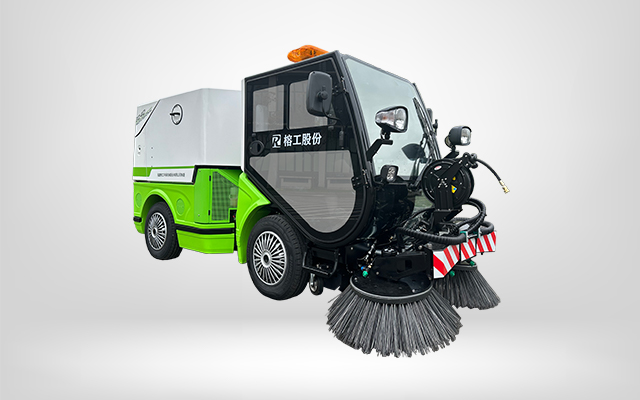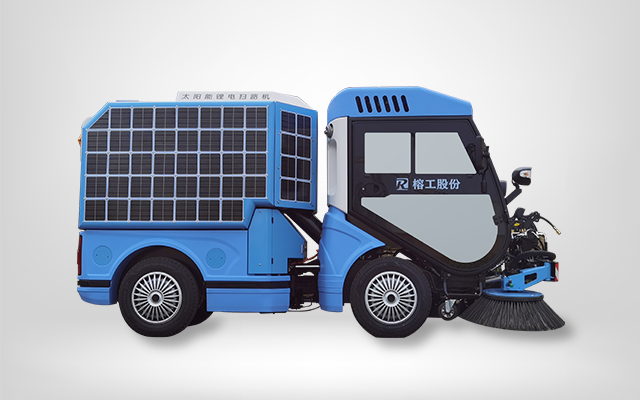
The autonomous road sweeper represents the next frontier in urban and industrial maintenance. This advanced technology combines the principles of robotics, artificial intelligence, and sophisticated sensor arrays to create a machine capable of cleaning without a human driver. It promises a future where cleaning operations are more efficient, precise, and data-driven than ever before. While still an emerging technology, the autonomous road sweeper is poised to revolutionize how we maintain our public and private spaces. This guide will explore the complex technology that powers these machines, their significant benefits, potential applications, and the path toward their wider adoption.
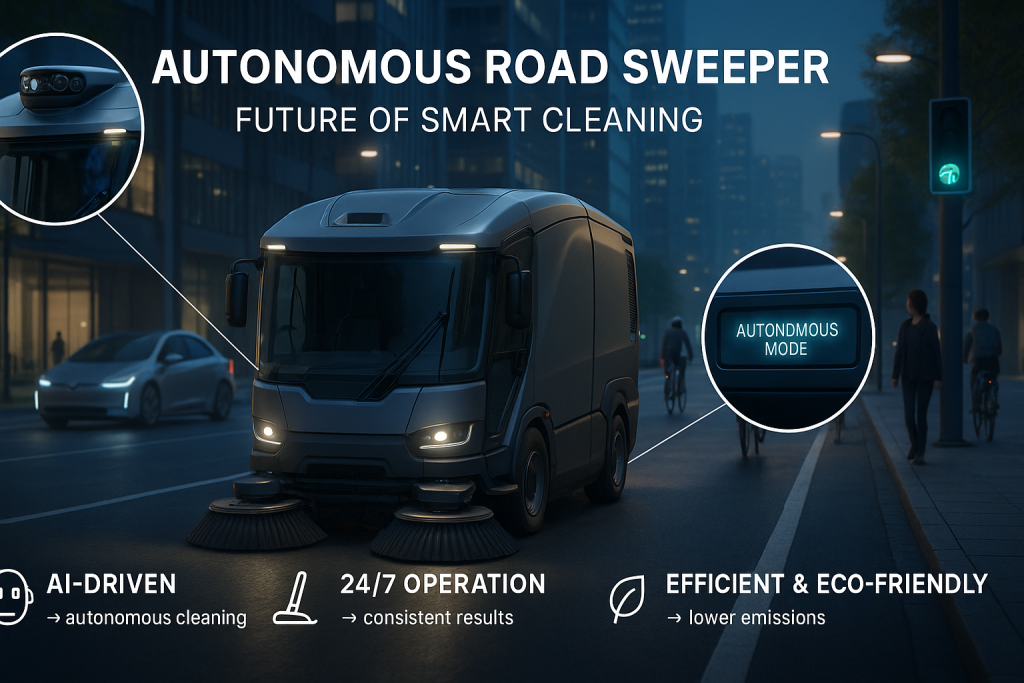
An autonomous road sweeper is a marvel of modern engineering. It relies on a suite of integrated technologies that work together to perceive the environment, make intelligent decisions, and perform its cleaning tasks safely and effectively. Understanding these core components is key to appreciating the machine’s capabilities.
The foundation of any autonomous vehicle is its ability to perceive its surroundings. An autonomous road sweeper uses a multi-layered sensory system to build a detailed, real-time picture of the world. LiDAR, which stands for Light Detection and Ranging, is a primary sensor. It spins rapidly, sending out millions of laser pulses per second. By measuring the time it takes for these pulses to bounce back, it creates a precise 3D map of the environment.
High-resolution cameras act as the machine’s eyes. They are used for object recognition, identifying pedestrians, other vehicles, street signs, and different types of litter. Radar is another crucial sensor. It works well in adverse weather conditions like rain or fog, where LiDAR and cameras may struggle. It is excellent for detecting the speed and distance of other objects. Finally, a high-precision GPS and an Inertial Measurement Unit (IMU) work together to pinpoint the sweeper’s exact location and orientation at all times.
All the data collected by the sensors is fed into the machine’s central computer, which acts as its brain. This is where artificial intelligence (AI) and machine learning (ML) algorithms come into play. The AI fuses the data from all the different sensors to create a single, comprehensive understanding of the environment. This is known as sensor fusion.
Based on this understanding, sophisticated path planning algorithms calculate the most efficient route for the sweeper to follow to cover its designated cleaning area. As it moves, obstacle avoidance systems constantly monitor the path ahead, ready to slow down, stop, or navigate around any unexpected hazards. Through machine learning, the autonomous road sweeper can even improve its performance over time. By analyzing data from countless hours of operation, the system learns to better recognize objects and handle complex scenarios.
An autonomous road sweeper does not operate in isolation. It is a connected device, part of the Internet of Things (IoT). Through a cellular or Wi-Fi connection, the sweeper is in constant communication with a central control center. This allows a remote manager to monitor the machine’s status, location, and cleaning progress in real time.
This connectivity also enables remote diagnostics and over-the-air (OTA) software updates. Engineers can update the machine’s AI algorithms and add new features without ever having to physically touch the vehicle. This IoT framework is the nervous system that links the machine to its human managers, making it a true smart road sweeper with IoT capabilities.
The shift from manual to autonomous operation brings with it a host of powerful benefits. These advantages have the potential to make cleaning operations safer, more efficient, and more intelligent, leading to significant improvements in both cost and quality.
An autonomous road sweeper is designed for maximum efficiency. Before a job even begins, its software can calculate the mathematically optimal path to clean an area, eliminating wasted time, unnecessary overlap, and inefficient turns. Once deployed, the machine can operate continuously, 24 hours a day, 7 days a week, stopping only for charging and maintenance.
This continuous operational capability dramatically increases productivity. Furthermore, an autonomous system maintains a consistent speed and cleaning performance throughout its shift. It does not suffer from fatigue or distractions, ensuring that the quality of the cleaning is the same in the last hour of operation as it was in the first. This leads to a more predictable and reliable outcome.
One of the most compelling benefits of an autonomous road sweeper is its potential to improve safety. It removes the human operator from what can be a hazardous working environment. Sweeper operators often have to work at night, in live traffic, and in industrial areas with heavy machinery. Automating this task eliminates the direct risk to the individual.
The advanced sensor suite of an autonomous vehicle can, in some conditions, perceive the environment more reliably than a human. LiDAR can see in complete darkness, and radar can see through thick fog. The machine’s 360-degree sensor coverage eliminates blind spots. By removing the element of human error, which is a factor in a vast majority of traffic accidents, autonomous systems have the potential to make cleaning operations much safer.
An autonomous road sweeper is also a mobile data collection platform. As it performs its cleaning duties, its sensors can be used to gather valuable information about the state of the infrastructure. It can identify and log the location of potholes, faded road markings, or damaged signs. Its debris sensors can collect data on the types and quantities of litter, creating “heat maps” that show a city’s dirtiest areas.
This data allows managers to shift from a fixed cleaning schedule to a more dynamic, data-driven approach. It also applies to the health of the machine itself. The deep road sweeper IoT integration allows for predictive maintenance. Sensors on the machine can detect early signs of wear on a brush or a problem with a motor, automatically scheduling a service appointment before a failure occurs.
Many municipal and industrial sectors are facing significant challenges in recruiting and retaining skilled equipment operators. The job can be demanding, and the available labor pool is shrinking in many regions. An autonomous road sweeper can help to fill this gap.
These machines can handle the most repetitive and labor-intensive sweeping tasks, ensuring that the work gets done consistently. This does not necessarily eliminate jobs, but rather changes their nature. It allows the existing human workforce to be redeployed to more complex tasks that require human judgment and problem-solving skills, such as operating other equipment or performing detailed maintenance.
While the vision is for autonomous sweepers to one day clean any street, the initial rollout is focused on more controlled and predictable environments. These early applications provide the perfect setting to prove the technology’s reliability and effectiveness.
Controlled environments with limited public access are the ideal starting point for an autonomous road sweeper. These locations present fewer unexpected variables, making them easier for the AI to navigate safely.
In these settings, the machines can run on highly repetitive and predictable routes, often at night when human activity is at a minimum.
Semi-controlled environments are the next logical step. Places like large university campuses, corporate parks, and private gated communities have well-defined road networks and lower speed limits. The traffic patterns are often more predictable than on public city streets. An autonomous road sweeper could efficiently maintain the pathways, service roads, and parking lots in these areas, operating safely alongside pedestrians and local vehicle traffic.
The most complex challenge is deploying an autonomous road sweeper on busy, unpredictable public city streets. This is the ultimate goal, but it will likely be achieved through a phased approach. Initial deployments might be limited to specific times, such as overnight hours when traffic is light. They could also be assigned to simpler routes first, such as dedicated bus lanes or protected bike paths. As the technology matures and public trust grows, the operational scope of these autonomous sweeping solutions will gradually expand to cover the entire urban network.
The path to widespread adoption of autonomous road sweepers is not without its obstacles. There are significant technical, regulatory, and financial challenges that need to be addressed before these machines become a common sight.
The laws and regulations governing the operation of fully autonomous vehicles on public roads are still being written. Before a driverless sweeper can be deployed in a city, there needs to be a clear legal framework in place. This includes standards for safety certification, liability in case of an accident, and data privacy. Gaining public acceptance is another crucial hurdle. The technology must be proven to be exceptionally safe and reliable to earn the trust of citizens and policymakers.
The sophisticated sensors and powerful computers required for autonomy make these machines very expensive. The initial capital investment for an autonomous road sweeper is significantly higher than for a conventional, human-operated machine. Fleet managers will need to conduct a detailed Total Cost of Ownership (TCO) analysis. This analysis must weigh the high upfront cost against the potential long-term savings from increased efficiency, reduced labor costs, and lower fuel consumption. As the technology matures and production scales up, these costs are expected to decline.
For a large, heavy vehicle to operate without a driver, its safety systems must be foolproof. This requires redundancy in all critical systems. An autonomous road sweeper must have multiple, overlapping sensors, as well as backup braking and steering systems that can take over in the event of a primary system failure.
Cybersecurity is another paramount concern. The machine’s software must be protected from hacking or malicious attacks. A robust cybersecurity protocol is essential to ensure that the vehicle cannot be controlled by an unauthorized party. Rigorous testing and validation in both simulated and real-world environments are required to prove the resilience of these safety and security systems.
The transition to fully autonomous sweeping will not happen overnight. It is a gradual process of evolution, often described in terms of the standard levels of vehicle automation. Understanding this progression helps to set realistic expectations for the technology’s development.
Vehicle autonomy is typically categorized on a scale from Level 0 to Level 5. Level 0 is a completely manual vehicle. Levels 1 and 2 involve driver assistance features, such as cruise control or lane-keeping assist, where the human is still fully in charge. Many modern “smart” sweepers today incorporate these Level 2 features.
Level 3 allows the vehicle to handle most driving tasks in certain conditions, but the human driver must be ready to take back control at any moment. Level 4 is where true autonomy begins. A Level 4 vehicle can operate entirely on its own within a specific, geographically defined area (a concept known as “geofencing”). Level 5 is the ultimate goal: a vehicle that can operate autonomously anywhere, in any conditions. Most current development is focused on achieving reliable Level 4 autonomy.
In the near-term future, many autonomous road sweepers will likely operate under the supervision of a remote human operator. This “human-in-the-loop” approach involves a person monitoring the sweeper’s status from a control center. If the machine encounters a scenario its AI cannot resolve, such as complex road construction or an instruction from a police officer, it can request help. The remote operator can then assess the situation and either provide guidance or take direct remote control of the vehicle to navigate the tricky spot. This provides a crucial layer of safety and intelligence.
The full potential of an autonomous road sweeper is unlocked when it becomes part of a larger smart city ecosystem. A truly high-tech street sweeper machine will not just see its environment; it will communicate with it. This is known as Vehicle-to-Everything (V2X) communication.
The sweeper could receive information from traffic lights to optimize its passage through intersections. It could get data from smart trash bins, telling it which areas need immediate attention. This integration allows for a truly dynamic and responsive cleaning system, a key part of the vision for the city of the future. The history of the Street Sweeper shows a constant evolution, and this is the next logical step.
The autonomous road sweeper is set to redefine the future of urban and industrial cleaning. While significant challenges related to regulation, cost, and public trust remain, the rapid advancement of the underlying technology is undeniable. These intelligent machines promise a future where cleaning is not only more efficient and cost-effective but also safer and more data-driven. The autonomous road sweeper is a cornerstone technology in the development of the smart city, representing a critical step towards cleaner, more intelligent, and more sustainable environments for all.
This is the first one.