Cost-effective road sweeper solutions are essential for delivering high-quality public services within a budget. For any municipality or large commercial enterprise, the process of keeping streets and properties clean is a significant operational expense. The key to financial prudence in this area is to understand that true cost-effectiveness is not simply about finding the machine with the lowest purchase price. It is a holistic strategy that encompasses smart equipment acquisition, efficient day-to-day operation, and a focus on long-term value. The proven results of a well-planned program are a higher standard of cleanliness achieved at the lowest possible lifecycle cost. This guide will provide a complete overview of how to find and implement truly cost-effective road sweeper solutions.
The foundational principle of any cost-effective equipment strategy is the concept of Total Cost of Ownership, or TCO. Focusing only on the initial purchase price is the single biggest mistake a buyer can make. A machine that is cheap to buy can be incredibly expensive to own and operate over its service life. TCO provides a much more accurate and strategic framework for evaluating the true financial impact of a machine.
The sticker price of a new road sweeper is only the tip of the financial iceberg. It represents just one component of the total amount of money that will be spent on that machine over the next decade or more. A procurement process that awards a contract based solely on the lowest initial bid is fundamentally flawed and almost always leads to poor long-term outcomes. True cost-effectiveness can only be understood by looking at the entire picture of lifetime expenses.
A comprehensive TCO analysis is a model that accounts for all costs associated with a piece of equipment, from the day it is acquired to the day it is retired. The key components of this calculation include the acquisition cost, which is either the full purchase price or the sum of all lease payments. It includes all projected operating costs, such as fuel or electricity, operator wages, and the cost of consumable items like replacement brushes and filters.
The analysis must also include all projected maintenance costs, covering both scheduled preventive service and an estimate for unscheduled repairs. Finally, the calculation should account for the machine’s end-of-life value. This is either the cost to dispose of the machine or, for a high-quality unit, the positive financial return from its resale value.
The power of a TCO analysis is that it allows for a true, apples-to-apples comparison between different machines and different acquisition models. It provides the data needed to make a decision based on long-term value, not short-term price. This analysis will often reveal that a machine with a slightly higher initial purchase price, but with superior fuel efficiency and a reputation for reliability, is actually the more cost-effective choice in the long run. This data-driven approach is the cornerstone of all truly cost-effective road sweeper solutions.
How an organization chooses to acquire its equipment has a massive impact on the overall cost-effectiveness of its fleet. The traditional model of direct ownership is no longer the only, or often the best, option. A modern, strategic approach to acquisition involves using a flexible mix of leasing and rental services to perfectly match the fleet to the actual operational need.
Long-term leasing is a powerful tool for creating a cost-effective fleet. The primary benefit is that it avoids the need for a large, upfront capital outlay, preserving the organization’s capital funds for other priorities. It converts the cost of the equipment into a series of predictable, budget-friendly operating expenses. For the ultimate in cost certainty, a full-service lease, which bundles all maintenance and repair costs into the fixed payment, is an excellent option. Partnering with a specialized road sweeper leasing company is a key strategy for any organization looking to modernize its fleet in a fiscally responsible way.
For cleaning needs that are temporary or seasonal, a short-term rental is by far the most cost-effective solution. The classic example is the autumn leaf season, which creates a massive, but short-lived, surge in cleaning demand. It is not cost-effective to own extra machines that will sit idle for the majority of the year just to handle this peak.
A municipal road sweeper rental service allows an organization to temporarily scale up its fleet to meet this demand. This ensures that the city is only paying for the extra capacity precisely when it is needed. This tactical use of rentals is a core principle of a lean and efficient fleet management strategy.
For the most immediate and shortest-term needs, such as an emergency spill cleanup or a one-day post-event cleanup, daily road sweeper hire services provide the ultimate in flexibility and cost-effectiveness. This on-demand model allows a manager to acquire a machine and a skilled operator for a single day, turning a potentially large logistical problem into a simple service call. It is the perfect solution for unplanned or one-off cleaning tasks.
The most sophisticated and cost-effective overall strategy is often a blended fleet model. This approach does not rely on a single acquisition method. Instead, it uses a strategic mix of owned, leased, and rented assets. The organization might own or lease a core fleet of sweepers to handle its baseline, year-round cleaning needs. It then uses rentals to handle all the peaks, valleys, and unexpected events. This approach provides “fleet elasticity,” ensuring that the organization always has the exact right number of machines to meet its current needs, which is the key to eliminating the waste of underutilized assets.
Modern technology is a powerful driver of cost-effectiveness in the world of street cleaning. Innovations in power sources, software, and cleaning systems are all contributing to machines that can deliver better results at a lower operational cost.
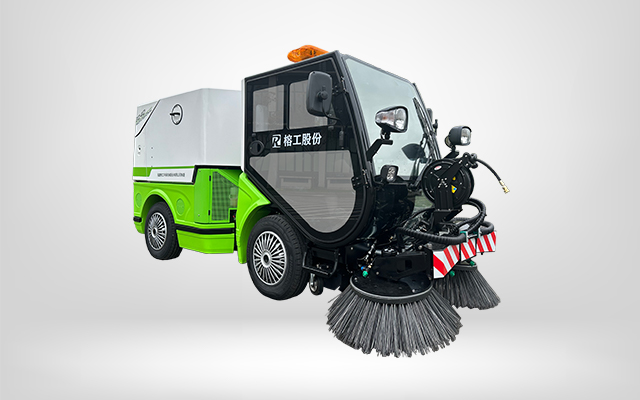
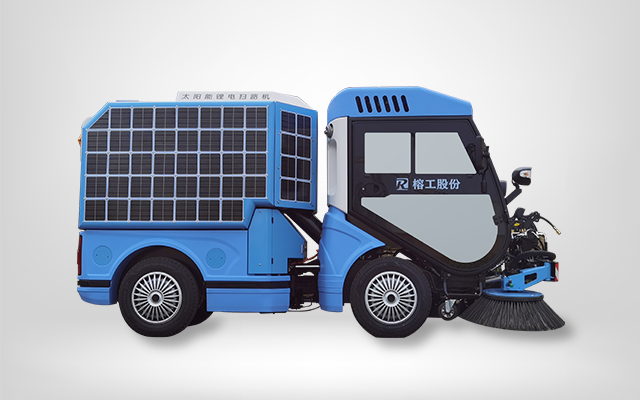
The rise of the all-electric sweeper is a major development in the search for cost-effective road sweeper solutions. While an electric machine typically has a higher initial purchase price than a comparable diesel model, its Total Cost of Ownership is often significantly lower. The first major saving comes from fuel, as the cost of electricity is consistently lower than the cost of diesel.
The second, and perhaps more significant, saving comes from maintenance. An electric powertrain is mechanically much simpler than a diesel engine and has far fewer moving parts. This leads to drastically reduced routine maintenance costs and higher overall reliability. Over the life of the machine, these savings can more than repay the initial price difference.
Smart technology, in the form of IoT and GPS telematics, is another powerful tool for improving cost-effectiveness. These systems can be used with route optimization software to calculate the most efficient possible path for a sweeper to follow. This reduces the total miles driven on every single shift. The proven results are lower fuel or energy consumption, reduced labor hours, and less wear and tear on the vehicle.
A machine that can achieve a perfect clean in a single pass is inherently more cost-effective than one that requires a second pass to get the job done. A key consideration is therefore the raw cleaning efficiency of the machine. This is where partnering with a high-efficiency road sweeper supplier becomes important. They can provide machines with the latest, most effective cleaning technologies, such as advanced regenerative air systems or high-performance vacuum systems. Better cleaning performance translates directly into lower operational costs.
The design philosophy of a machine has a direct and profound impact on its long-term cost-effectiveness. A machine that is engineered from the ground up to be reliable and easy to service will always be a better long-term value. This is why a focus on low maintenance street cleaning machines is a critical part of a cost-effective strategy.
A durable, well-built machine is a more cost-effective machine. The proven results of investing in a high-quality machine are clear and measurable.
A machine that is easy for a mechanic to work on is a machine that costs less to maintain. Manufacturers of low-maintenance machines pay close attention to the serviceability of their designs. They use features like large, tool-free access panels, logically grouped daily service points, and modular components. These thoughtful design choices can significantly reduce the amount of labor time required for both routine service and unexpected repairs, which translates into direct cost savings.
A well-trained operator is a key part of any low-maintenance program. An operator who is trained to use the machine smoothly and correctly will cause less unnecessary wear and tear. An operator who is trained to perform a thorough pre-shift inspection can often spot a small problem, like a loose hose or a low fluid level, before it can escalate into a major, costly failure. Investing in operator training is a highly cost-effective way to protect the long-term health of your equipment.
Beyond the equipment itself, there are broader strategic decisions that can contribute to a more cost-effective overall cleaning program. This involves looking at the entire service delivery model and considering all available options.
For some organizations, particularly those without a large in-house maintenance department, the most cost-effective solution of all may be to outsource the entire cleaning function. When you partner with a provider of contract road cleaning machines, you are not buying or leasing a machine; you are buying a guaranteed result. The contractor is responsible for the equipment, the operator, all maintenance, and all fuel. This converts the entire cleaning operation into a single, predictable service fee, offering the ultimate in budget certainty.
Another way to improve the cost-effectiveness of a fleet is to reduce the total number of vehicles it contains. A multifunctional street sweeper machine is a powerful tool for achieving this. A sweeper that is also equipped with a high-pressure washing system, a catch basin cleaner, or even snow removal equipment can do the job of two or three separate vehicles. This reduces the total capital investment and the ongoing cost of maintaining and insuring the fleet.
The entire history of the Street sweeper has been a story of innovation driven by the need for greater efficiency and cost-effectiveness. From the first move away from manual labor to the development of powerful hydraulic systems and now to the rise of electric and smart technologies, the goal has always been to deliver a better clean for a lower cost. This is also true for the entire category of equipment available from a modern street cleaning equipment supplier.
Achieving proven results with cost-effective road sweeper solutions requires a strategic and holistic approach. It is about looking beyond the initial price tag and focusing on the long-term value offered by a low Total Cost of Ownership. It involves choosing smart acquisition models like leasing and renting, embracing efficient technologies like electric power, and prioritizing a low-maintenance design. By following these principles, any public or private organization can build a cleaning program that is both fiscally responsible and highly effective.
This is the first one.