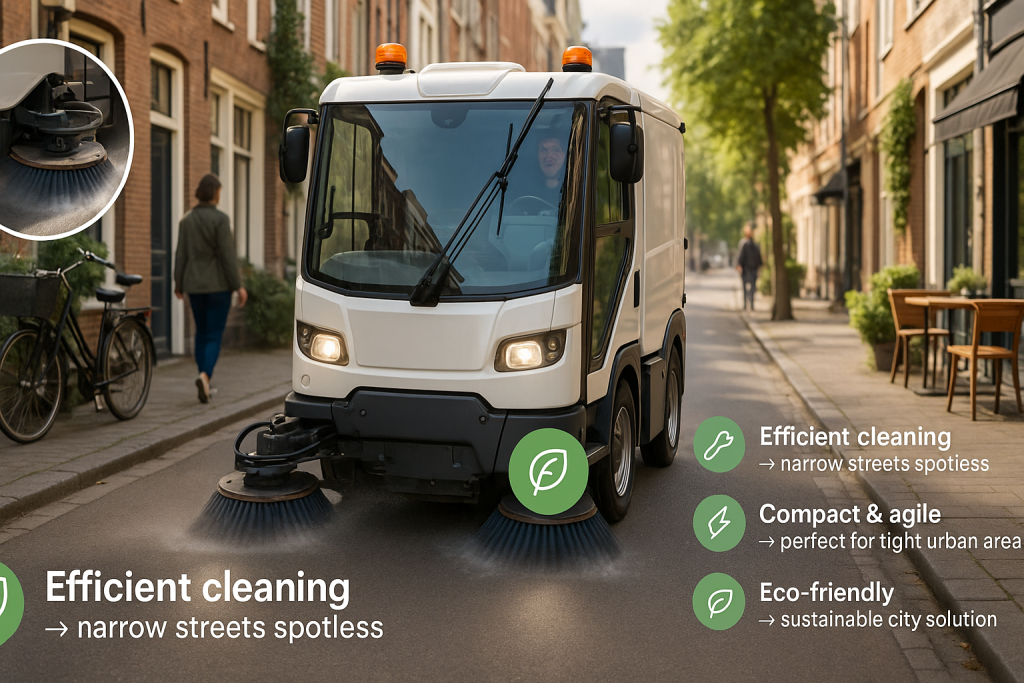
A compact sweeper for narrow streets is the best urban fit for modern city cleaning challenges. As cities around the world continue to grow and become denser, public works departments are faced with the difficult task of maintaining cleanliness in increasingly confined spaces. The large, traditional street sweepers that are effective on wide arterial roads are often completely unsuitable for the narrow lanes of a historic city center or a congested residential neighborhood. A specialized compact sweeper for narrow streets is a machine that has been engineered from the ground up to solve this specific problem. This guide will provide a complete overview of these agile and efficient machines, detailing their features, benefits, and critical role in a comprehensive urban sanitation program.
The limitations of traditional, large-scale sweepers become immediately apparent when they are deployed in the dense and complex environment of an urban core. These machines are designed for a different world of long, straight, and wide-open roads. Their failure in narrow streets is not a flaw in their design, but simply a case of using the wrong tool for the job.
A large, truck-mounted road sweeper has a very wide turning radius, similar to that of any other large truck. This makes it extremely difficult, and often impossible, for them to navigate the sharp, 90-degree corners that are common in older city districts and dense residential areas. Attempting to make such a turn can require a multi-point turn, a maneuver that is time-consuming, disruptive to traffic, and can be dangerous.
This limitation means that many narrow streets and cul-de-sacs are effectively inaccessible to these larger machines. This results in an inconsistent standard of cleanliness across the city, where the main roads are clean, but the smaller side streets are neglected.
Beyond the turning radius, the simple physical dimensions of a large sweeper are a major barrier. Many historic lanes and older residential streets are simply not wide enough to accommodate a large truck, especially if there are cars parked on one or both sides. Attempting to force a large machine down a narrow street risks damage to the sweeper, to parked cars, and to private property.
The height of a large sweeper can also be a problem. Low-hanging tree branches, the low clearances of older bridges, or the presence of building overhangs and balconies can make a street impassable for a tall machine. These physical constraints create no-go zones for a traditional sweeper fleet.
A large, truck-mounted sweeper is an extremely heavy vehicle. When fully loaded with water and debris, it can weigh many tons. This immense weight can be a problem for certain types of delicate or historic pavement surfaces. The ground pressure exerted by a heavy sweeper can damage valuable cobblestone, brick, or decorative paving stones.
Furthermore, the weight of the machine may exceed the posted limits for older, smaller bridges or for streets that run over underground utilities or structures like subway tunnels. A lighter, more compact sweeper offers a much gentler and safer solution for these sensitive areas of the urban landscape.
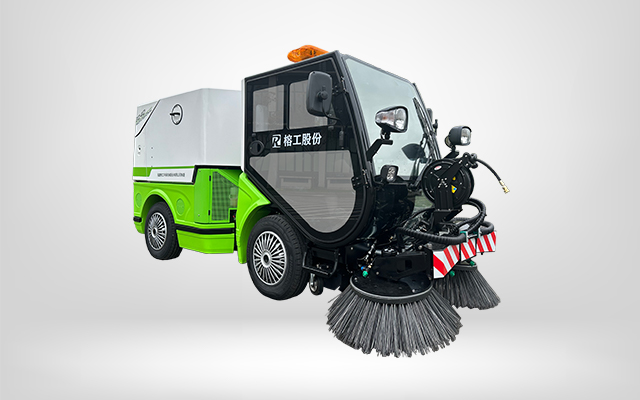
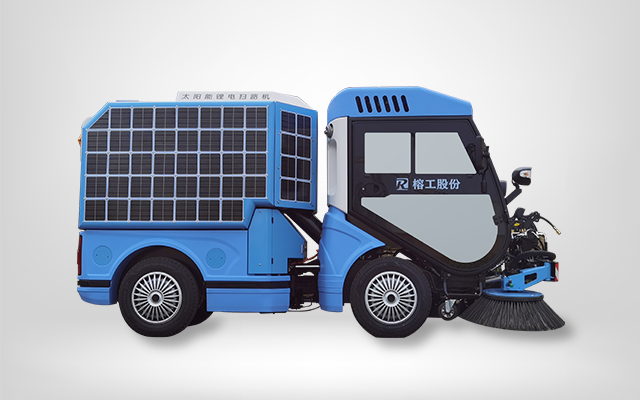
A compact sweeper for narrow streets is the purpose-built solution to all these challenges. Its design is a masterclass in efficiency and agility, with every feature optimized for performance in confined spaces. These machines are not just smaller versions of large sweepers; they are a distinct class of equipment with their own unique and advanced engineering.
The key feature that gives a compact sweeper for narrow streets its incredible maneuverability is its steering system. While some models use a four-wheel steering system, many of the most agile machines feature an articulated steering design. This means that the machine’s frame is hinged in the middle, between the front and rear axles.
When the operator turns the steering wheel, the entire machine pivots at this central point. This allows for an exceptionally small turning circle, enabling the machine to make sharp turns with ease and to navigate around obstacles with a level of precision that is impossible for a rigid-frame vehicle. This agility is the core of its effectiveness in complex urban layouts.
The overall physical dimensions of a compact sweeper for narrow streets are, by definition, minimal. They are engineered to have the narrowest possible width and the lowest possible overall height for their capacity class. This small physical footprint is what allows them to physically fit into the tight spaces where larger machines cannot go.
This design allows them to comfortably pass down narrow laneways, even with parked cars present. It enables them to work under low tree canopies and other overhead obstructions. This ability to access every part of the urban environment is what makes them the best urban fit. They are the key that unlocks the ability to clean an entire city, not just its main thoroughfares. This is the essence of what makes a general compact road sweeper so valuable.
While a compact sweeper for narrow streets is small, it is not a light-duty machine. It is designed to be a productive and efficient tool. Engineers have carefully balanced the need for a small footprint with the need for a practical debris hopper capacity. The hopper on a compact sweeper is, of course, smaller than that of a large, truck-mounted unit.
However, it is carefully sized to be large enough for the demands of a typical dense urban route. A compact sweeper can typically operate for several hours, collecting a significant volume of debris before it needs to stop and travel to a disposal site. This focus on a perfect balance between machine agility and practical work capacity is a hallmark of a well-designed machine.
The deployment of a compact sweeper for narrow streets brings a host of proven and measurable benefits to a municipality. These advantages lead to a higher standard of cleanliness, greater operational efficiency, and a better quality of life for residents.
The single greatest benefit is the ability to achieve a truly comprehensive, city-wide standard of cleaning. By using a compact sweeper for narrow streets, a public works department can finally reach all the areas that were previously inaccessible to its larger machines. This eliminates the problem of having clean main roads but dirty side streets.
This ability to clean every street, lane, and alley ensures a consistent and high standard of sanitation across the entire community. It means that all residents, regardless of where they live, receive the same high level of service. This comprehensive coverage is the foundation of a truly professional urban cleaning program.
It might seem counterintuitive, but using a smaller machine can often be more efficient. When cleaning a complex route with many tight corners and obstacles, a compact sweeper will complete the job much faster than a large machine attempting the same task. The compact sweeper can navigate the route in a smooth, continuous path. The large machine would have to constantly stop, back up, and perform difficult multi-point turns.
This increased efficiency saves valuable operator time. A compact sweeper also has a smaller engine and consumes significantly less fuel than a large truck-mounted unit. For the specific task of cleaning narrow streets, it is therefore a much more cost-effective and productive tool.
A smaller machine is a less intrusive machine. A key benefit of using a compact sweeper for narrow streets is the reduced level of disruption it causes to the daily life of the city.
Furthermore, these machines are typically much quieter than their larger counterparts, which reduces noise disturbance for residents.
The unique capabilities of a compact sweeper for narrow streets make it the ideal solution for a variety of specific urban and commercial environments that are defined by their confined spaces and complex layouts.
Many cities have historic cores or “old town” districts that are a major cultural and tourist attraction. These areas are characterized by their narrow, winding, and often cobblestoned streets. A compact sweeper is the only type of machine that can effectively and safely clean these delicate and valuable urban spaces. Its low weight and agile handling allow it to clean thoroughly without damaging the historic pavement.
Many older, established residential neighborhoods were built with much narrower streets than are common today. These streets are often lined with parked cars on both sides, leaving a very narrow channel for traffic. A compact sweeper has the slim profile needed to navigate these congested residential areas and provide a regular, high-quality cleaning service.
While even smaller, sub-compact machines are the top choice for fully pedestrian-only zones, a compact sweeper for narrow streets is the perfect tool for “shared spaces.” These are areas where vehicle access is limited and where cars, cyclists, and pedestrians share the same space. The excellent all-around visibility and agile handling of a compact sweeper make it a much safer option for working in these integrated environments than a large truck. This machine is a close cousin to the more specialized road sweeper for pedestrian zones.
The value of a compact sweeper extends beyond public streets. Large, sprawling private campuses, such as those of a university, a hospital, or a major industrial park, often have their own extensive network of narrow service roads. These roads are essential for the facility’s logistics but are often too small for a large sweeper. A compact sweeper is the ideal tool for maintaining these private road networks.
To ensure you choose the absolute best urban fit for your city, a strategic selection process is required. This involves analyzing your specific needs and evaluating the capabilities of the machines available.
The first and most important step is to conduct a detailed analysis of all the narrow-street routes in your city. Your team should physically go out and map and measure these areas. You need to identify the absolute narrowest point that the sweeper will have to pass through. You must find and measure the tightest corners to determine the required turning radius.
This data-driven approach will create a clear set of technical specifications for your ideal machine. It will define the maximum allowable width, height, and weight, and the minimum required maneuverability. This ensures you choose a machine that is guaranteed to fit your city’s most challenging spaces.
While size and agility are key, the machine must also have the power to clean effectively. When evaluating models, look at the power of the suction or vacuum system. It must be strong enough to pick up the typical debris found on your city streets. Vacuum-based systems are often preferred for urban applications as they tend to be quieter and very effective at controlling dust.
You should also strongly consider eco-friendly power options. Many of the best compact sweepers are now available in all-electric, battery-powered versions. These models offer the ultimate in low-noise, zero-emission performance, making them the perfect choice for a sustainable city.
It is crucial to remember that a compact sweeper is one specialized tool within a larger, integrated fleet of city street cleaning machines. The most effective cleaning programs use a “right tool for the job” approach. The compact sweepers handle the dense, difficult areas, while larger, more productive machines handle the main arterial roads. A successful strategy depends on having a balanced fleet with a range of different machine types. The long history of the Street sweeper is a story of this continuous trend toward greater specialization.
The core message is simple but powerful. A compact street sweeper for narrow streets is a specialized problem-solver. It is the specific and targeted solution to the growing urban challenge of cleaning in dense and confined spaces. It is the key that allows a public works department to unlock a new level of comprehensive cleanliness.
A compact sweeper for narrow streets is a truly indispensable tool for any modern city. Its unique and specialized design, focused on agility and a small footprint, makes it the only effective solution for cleaning the historic, dense, and congested areas that are inaccessible to traditional machines. It is the key to achieving a consistently high standard of cleanliness across an entire community. For any municipality that is committed to the health, safety, and quality of life of all its residents, the compact sweeper for narrow streets is the best urban fit.
This is the first one.