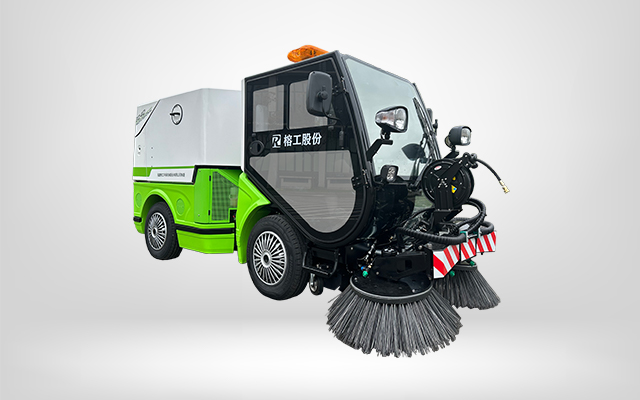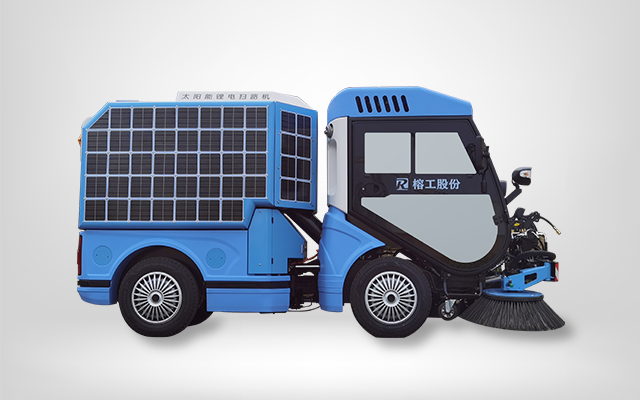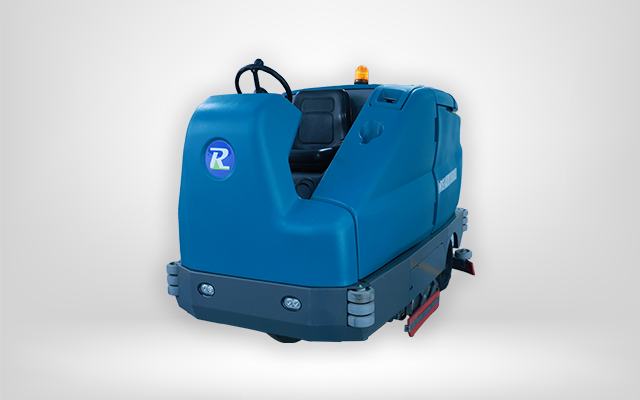
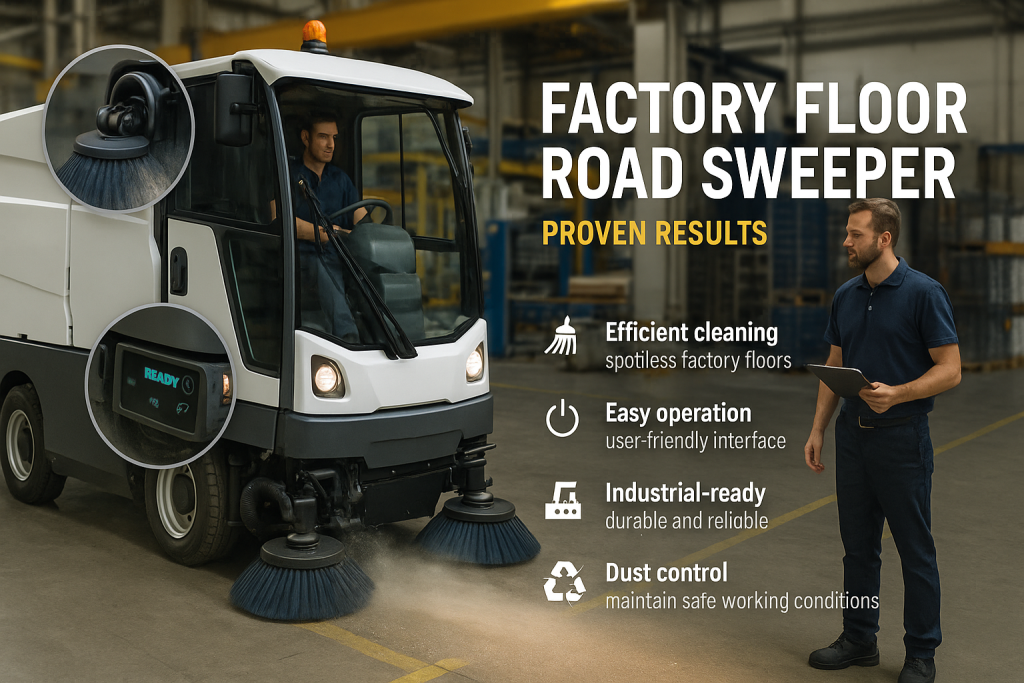
A factory floor road sweeper is an essential tool for maintaining a safe, clean, and productive manufacturing environment. The floors of a modern factory are a dynamic and challenging space, subject to a wide variety of industrial debris, heavy traffic from forklifts and personnel, and the constant need to protect both sensitive products and the health of employees. A simple mop and bucket or a light-duty commercial cleaner is completely inadequate for this task. A specialized, industrial-grade factory floor road sweeper is required to effectively manage these conditions. This guide will provide a complete overview of these powerful machines, from selecting the right model to implementing best practices for their daily use.
To understand the need for a specialized factory floor road sweeper, one must first appreciate the unique and demanding cleaning challenges that a manufacturing environment presents. These challenges go far beyond those of a typical commercial or retail space and require a purpose-built solution.
The debris found on a factory floor is incredibly diverse and is directly related to the production processes taking place. This is not just simple dust and litter. In a metal fabrication shop, the floor will be covered in sharp metal shavings and grinding dust. In a woodworking facility, it will be fine, combustible wood dust and larger wood chips. A plastics manufacturer will have to deal with spilled plastic pellets and trimming waste.
A food processing plant will have organic powders and packaging materials. A factory floor road sweeper must be versatile enough to handle this wide array of materials. It needs a powerful sweeping and suction system that can pick up everything from fine powders to larger, heavier fragments without clogging.
In a manufacturing environment, airborne dust is more than just a nuisance; it is a significant threat. Dust can have a severe negative impact on the entire operation. It can work its way into the sensitive electronics and moving parts of expensive production machinery, causing premature wear and unexpected failures. This leads to costly downtime and repairs.
In many industries, such as electronics, pharmaceuticals, or food processing, dust can contaminate the products themselves, leading to quality control failures and rejected batches. Most importantly, many types of industrial dust, such as fine silica from concrete or certain chemical powders, are hazardous to employee health and can cause serious respiratory illnesses. An effective factory floor road sweeper must therefore have a superior dust control and filtration system.
A factory floor is a constantly moving, dynamic environment. The sweeper must be able to operate safely and efficiently alongside a continuous flow of forklift traffic, moving production lines, and personnel on foot. This requires a machine with excellent maneuverability, a tight turning radius, and responsive controls.
The operator must have a clear and unobstructed view of their surroundings to avoid collisions. The floor surfaces themselves can present challenges, sometimes being uneven, cracked, or slippery with oil or other fluids. A factory floor road sweeper must be robust enough to handle these imperfect conditions while providing a stable and safe platform for the operator.
Selecting the correct machine for your specific factory is a critical decision. The right factory floor road sweeper will be a productive and reliable asset, while the wrong one can be a source of constant frustration. The choice should be based on a careful evaluation of the power source, size, filtration system, and brush configuration.
For any indoor cleaning application, including a factory floor, an electric-powered sweeper is the only responsible and practical choice. The use of an internal combustion engine (diesel, gas, or LPG) in an enclosed space is a major safety hazard due to the exhaust fumes it produces.
An electric, battery-powered factory floor road sweeper produces zero localized emissions. This is absolutely essential for protecting the indoor air quality and the health of all employees. Electric machines are also significantly quieter than their combustion-engine counterparts. This helps to reduce the overall noise level in what is often an already loud industrial environment. The instant torque of the electric motors also provides excellent performance and responsiveness.
Factory floor sweepers come in a range of sizes, from small, maneuverable walk-behind models to large, highly productive ride-on machines. The choice depends on the size and layout of your facility. For smaller workshops or areas with very congested and narrow aisles, a walk-behind sweeper may be the most practical option.
For most large factories and production plants, however, a ride-on sweeper is necessary to clean the vast floor areas efficiently. When evaluating ride-on models, the machine’s turning radius is a critical specification. A tight turning radius is essential for navigating around fixed production machinery, support columns, and pallet racking. This agility is a key requirement for any type of warehouse road cleaning equipment.
The filtration system is arguably the most important feature to evaluate on a factory floor road sweeper. Its primary function is to ensure that the fine, hazardous dust picked up from the floor is captured and not simply exhausted back into the air. A superior filtration system is essential for protecting both people and products.
Look for machines that offer a multi-stage filtration process. The system should be capable of capturing very fine particles, down to the PM2.5 level. For particularly sensitive environments, such as a food processing or pharmaceutical plant, look for models that offer optional HEPA (High-Efficiency Particulate Air) filters. A robust and effective filter shaker mechanism is also vital. This system automatically cleans the filters during operation, preventing them from clogging and ensuring that the sweeper maintains strong suction performance.
The brushes are the components that do the direct work of lifting the debris from the floor. The type of brush material should be matched to the type of debris and the floor surface in your factory. For picking up fine dust on a smooth, sealed concrete floor, brushes with natural fiber bristles are often effective. For heavier, more abrasive debris, more durable synthetic bristles, such as polypropylene or nylon, are required.
It is also important to note that many modern factory floor cleaning machines are actually combination sweeper-scrubbers. These machines first sweep up the dry debris and then, in the same pass, apply a cleaning solution and scrub the floor with a second set of brushes, leaving it completely clean and dry with a rear squeegee. While this guide focuses on the sweeping function, these hybrid machines are a very popular and efficient option.
Owning the right factory floor road sweeper is just the first step. To get the maximum benefit from the machine, it must be integrated into a planned and professional cleaning program. Following a set of operational best practices will ensure a consistently clean, safe, and productive facility.
Effective factory cleaning is not a random or occasional activity. It should be a planned and scheduled part of the regular operational workflow. A formal cleaning schedule should be developed based on the specific needs of the facility. The frequency of cleaning should be determined by the rate at which debris is generated in different areas.
High-traffic areas, such as main aisles and loading docks, may require sweeping at the end of every shift. Production areas might need to be cleaned daily. Less-trafficked areas, such as long-term storage, might only need a weekly sweep. A documented schedule ensures consistency and accountability.
To ensure that the factory floor road sweeper can operate as efficiently as possible, a small amount of preparation can make a big difference. The operator should not have to constantly stop to move large, unexpected objects.
A skilled and well-trained operator is essential for getting the best results. Proper operation involves more than just driving the machine. The operator must know how to adjust the machine’s settings to match the conditions. This includes setting the correct downward pressure for the main and side brooms to ensure a clean sweep without causing excessive wear to the bristles or the floor surface.
The operator must also maintain a consistent and appropriate travel speed. Driving too fast will result in a poor-quality clean, leaving debris behind. Driving too slowly wastes time and battery life. It is also crucial that the dust control vacuum system is engaged at all times during operation to protect air quality.
The final step in the cleaning process is the safe and proper disposal of the collected waste. The debris collected from a factory floor can sometimes be classified as special or even hazardous waste, depending on the materials involved. The operator and the facility must follow all company policies and local environmental regulations for the disposal of this material. The machine’s hopper should be emptied at the end of every shift in the designated disposal area. Keeping the hopper clean also helps to maintain the machine’s performance and prevent cross-contamination.
A factory floor road sweeper, while critically important, is just one component of a comprehensive industrial cleaning strategy. It is a specialized tool that works alongside other machines and processes to maintain a safe and efficient workplace.
The factory floor road sweeper is a specialized type of industrial street sweeper machine, one that has been specifically adapted for indoor use. It is the primary tool for maintaining large, open floor areas. Its work is often complemented by manual cleaning with brooms and dustpans for small, hard-to-reach areas, and by other specialized cleaning equipment for tasks like degreasing or sanitizing. A holistic cleaning program integrates all these different methods into a cohesive and effective system.
For a factory with a clear, daily need for floor cleaning, the direct purchase or long-term lease of a machine is the most logical and cost-effective solution. However, for a facility that only requires an intensive, deep clean on a periodic basis, such as during a planned annual maintenance shutdown, a short-term hire is a much smarter option. Using an industrial street sweeper hire service provides access to a powerful machine for a short period without the high cost of ownership.
The challenges of cleaning a factory floor have many parallels with other heavy-duty environments. The lessons learned from cleaning a construction site, for example, are often applicable to a factory. Both environments involve heavy debris, a strong focus on dust control, and the paramount importance of safety. A company that provides a construction site road sweeper rental will often have the type of robust equipment and safety-conscious culture that is also well-suited to a factory setting.
The evolution of the factory floor road sweeper is part of a larger story of industrial automation. The process has evolved from purely manual labor with push brooms to the highly efficient and automated machines of today. This mirrors the development of the outdoor Street sweeper. This history is a testament to the ongoing drive for greater efficiency, safety, and cleanliness in all industrial and municipal environments.
A factory floor road sweeper is a vital and non-negotiable investment for any modern manufacturing facility. It plays a direct and crucial role in protecting the health and safety of employees, ensuring the quality of the products being manufactured, and prolonging the life of expensive production equipment. By carefully selecting the right machine for the specific needs of the facility and by implementing a set of operational best practices, a manufacturer can create a cleaner, safer, and more productive working environment.
This is the first one.