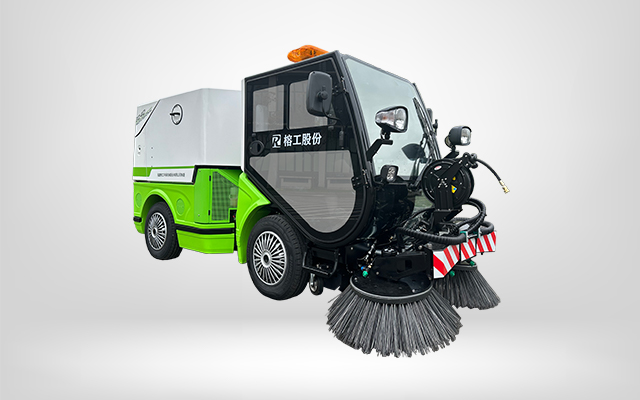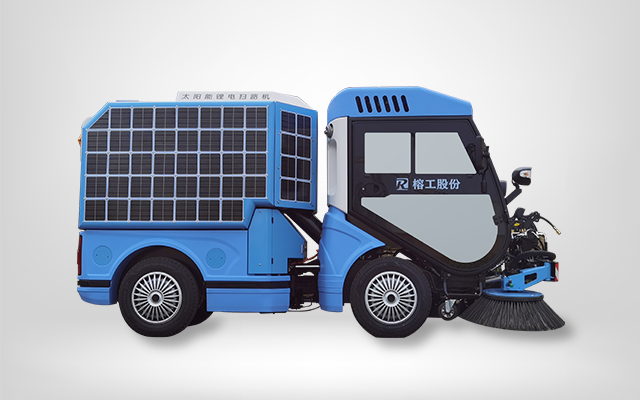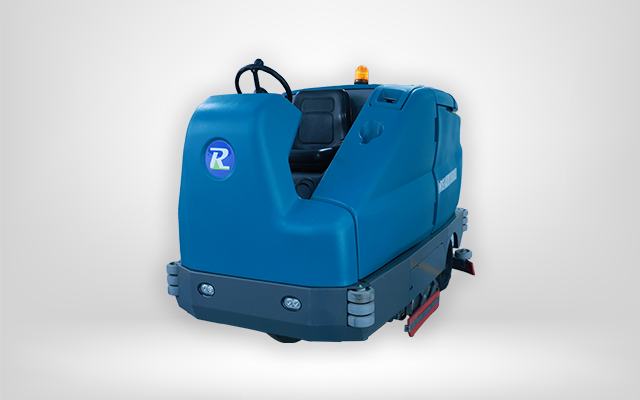
Green road cleaning equipment represents the best eco solutions for modern urban maintenance. The philosophy behind municipal and commercial cleaning has evolved significantly. It is no longer enough for a machine to simply remove debris from a street; it must do so in a way that actively protects the environment and enhances the quality of life for the community. The concept of “green” in this context is a holistic one, encompassing a commitment to reducing harmful emissions, minimizing noise pollution, and conserving precious natural resources. These advanced, eco-friendly solutions are no longer a niche segment of the market; they are rapidly becoming the new industry standard. This guide will provide a complete overview of green road cleaning equipment, exploring the technologies and design principles that define these sustainable machines.
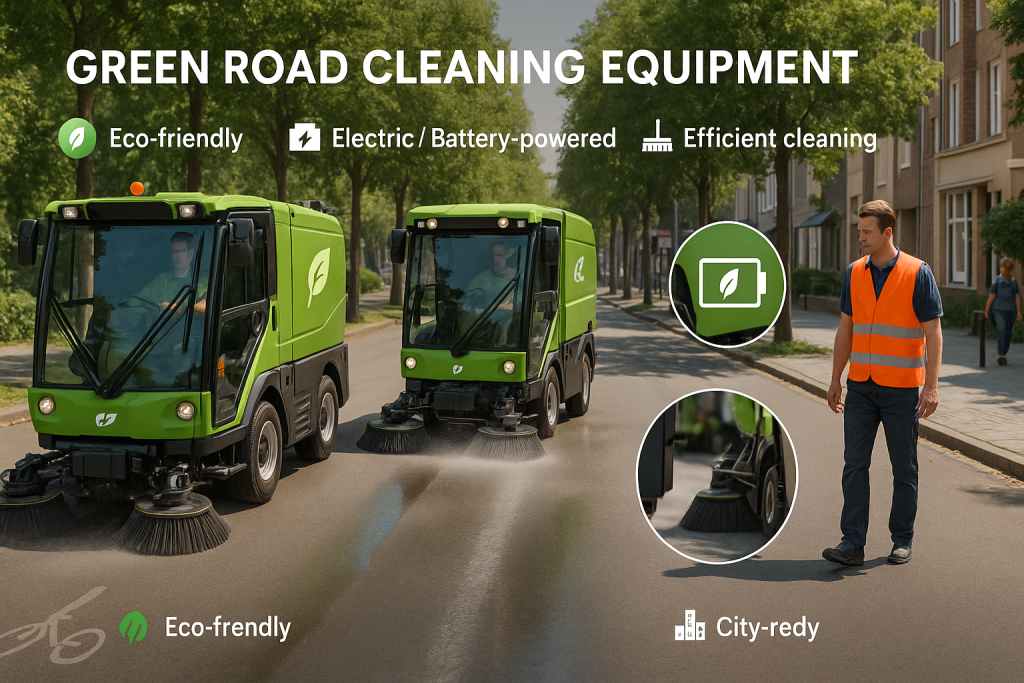
The most significant factor in the environmental impact of any piece of heavy equipment is its power source. The greatest advancements in green road cleaning equipment have therefore been in the development of cleaner, quieter, and more sustainable alternatives to the traditional diesel engine. These alternative power sources are the primary eco solution for modern fleets.
The undisputed gold standard in green road cleaning equipment is the all-electric, battery-powered machine. This technology offers a suite of environmental benefits that are simply unmatched by any combustion-based system. The most important of these is the complete elimination of tailpipe emissions. An electric sweeper produces no nitrogen oxides, no particulate matter, and no carbon dioxide at the point of operation.
This has a direct and immediate positive impact on urban air quality, creating a healthier environment for everyone. The second major benefit is the near-silent operation of the electric motors. This drastically reduces noise pollution, allowing for cleaning schedules that are far less disruptive to residents and businesses. For any organization aiming to deploy a true zero-emission road sweeper, all-electric is the ultimate choice.
For the largest and most demanding heavy-duty applications, where the current range of all-electric models may not yet be sufficient, advanced clean diesel technology offers a vital and practical eco solution. The modern diesel engines used in today’s green road cleaning equipment are a world away from the polluting engines of the past. They are highly engineered to meet the most stringent international emission standards, such as Tier 4 Final and Euro 6.
To achieve this, they are equipped with sophisticated exhaust after-treatment systems. This includes Diesel Particulate Filters (DPF) that capture soot and ash, and Selective Catalytic Reduction (SCR) systems that neutralize harmful nitrogen oxides. While not zero-emission, these clean diesel engines represent a massive reduction in pollution compared to older models and are an essential part of a pragmatic green fleet strategy.
Bridging the gap between clean diesel and full electrification is the use of various renewable and alternative fuels. These provide an immediate way to reduce the carbon footprint of a fleet, often without needing to purchase a brand-new vehicle. One of the most promising options is Hydrotreated Vegetable Oil (HVO). This is a premium, bio-based fuel made from renewable sources like waste oils and fats. It can be used as a direct, “drop-in” replacement for conventional diesel and can reduce net greenhouse gas emissions significantly.
Another established alternative is Compressed Natural Gas (CNG). CNG-powered sweepers burn much cleaner than traditional diesel, with lower emissions of many key pollutants. These alternative fuels are a key part of the transition toward a fully sustainable transportation and equipment sector.
A core principle of green road cleaning equipment is the efficient use of natural resources. In street sweeping, the most important resource, after fuel, is water. Water is essential for effective dust suppression, but it is also a precious commodity that must be conserved. The best eco solutions therefore incorporate advanced water management technologies.
The primary function of water in a road sweeper is to control dust. As the brushes agitate the debris on the street, fine particles can easily become airborne. This is not only a nuisance but also a significant public health risk. A fine mist of water sprayed onto the path of the brushes dampens this dust, keeping it on the ground so it can be effectively collected by the sweeper. However, a traditional sweeper can use a very large volume of water to achieve this. A truly green machine must perform this essential function with maximum efficiency.
The most advanced eco solution for water conservation is an onboard water recycling system. This technology represents a major leap in sweeper efficiency and sustainability. The system captures the dirty water that is picked up along with the debris from the street. This water is then passed through a sophisticated, multi-stage filtration process that may include cyclonic separators and self-cleaning filters.
This process removes the solid particles and contaminants from the water. The cleaned, recycled water is then pumped back into the main water tank to be reused for dust suppression. This creates a continuous, closed loop that can reduce the consumption of fresh water by a very large percentage. This not only conserves a vital resource but also dramatically increases the machine’s productivity by extending its working time between refills.
Even on machines that do not have a full recycling system, a focus on efficiency is a key part of the design of green road cleaning equipment. This is achieved through the use of smart, high-efficiency water delivery systems.
The concept of “green” is not just about what a machine consumes during its operation. It is also about the resources consumed during its entire lifecycle, from manufacturing to disposal. A truly sustainable approach to equipment design, therefore, focuses on durability, longevity, and the responsible use of materials.
The most sustainable and eco-friendly machine is one that is built to last. The manufacturing of a large piece of heavy equipment is an energy-intensive process that consumes a significant amount of raw materials. A machine that is poorly built and needs to be replaced after only a few years has a very large lifecycle environmental footprint.
A key eco solution is therefore to design for durability. Green road cleaning equipment is built with high-quality components, robust frames, and a focus on long-term reliability. A machine that provides 15 years of effective service instead of seven has effectively halved its manufacturing-related environmental impact. Longevity is a cornerstone of true sustainability.
The specific materials used in a machine’s construction are also a key part of its green credentials. A sustainable design will prioritize the use of high-quality, durable materials that extend the machine’s life. The use of corrosion-resistant stainless steel for the debris hopper and water tank, for example, is a sustainable choice because it prevents premature failure from rust.
Furthermore, the design should consider the end of the machine’s life. This involves using materials that are easily recyclable, such as steel and high-grade polymers. A design that allows for easy disassembly at the end of its service life makes this recycling process more efficient. This is a key feature of modern environmentally-friendly sweeper-machines.
A machine that is difficult and expensive to repair is more likely to be scrapped and replaced prematurely. Therefore, designing for easy maintenance is another core green principle. A sustainable design will feature easy, tool-free access to common service items like filters and brushes. It will have logically grouped service points to simplify daily checks. A modular design, which allows for the easy replacement of individual worn components rather than entire assemblies, also extends the machine’s life and reduces waste.
In the 21st century, one of the most powerful eco solutions is the use of smart, connected technology. Efficiency is a green principle, and the data and intelligence provided by modern telematics and IoT systems are powerful tools for improving the efficiency of any cleaning fleet.
A connected sweeper is a more efficient sweeper. Modern green road cleaning equipment can be fitted with advanced telematics and GPS systems. This allows a fleet manager to use sophisticated software to plan and optimize the cleaning routes. The software can calculate the most efficient possible path to cover all the required streets, which reduces the total miles driven.
This reduction in travel distance has a direct and measurable environmental benefit. It reduces the amount of fuel or electricity consumed, which in turn lowers the fleet’s overall carbon footprint. This data-driven approach to routing is a simple but powerful eco solution.
The traditional model of street cleaning involves rigid schedules. The same streets are cleaned on the same day, week after week, regardless of whether they are actually dirty. This is an inefficient use of resources. Smart technology allows for a shift to a more dynamic, on-demand cleaning model.
Data from a variety of sources, such as sensors in smart waste bins or reports from the public via a city app, can be used to dispatch cleaning assets only when and where they are actually needed. This ensures that the machines are not being used unnecessarily, which saves energy, reduces wear and tear, and lowers the overall environmental impact of the operation.
It is important to remember that a piece of green road cleaning equipment is a complete system. A true zero-pollution municipal cleaning vehicle is defined by more than just its power source. It is the combination of a clean engine, quiet operation, efficient water use, and effective dust control that creates a truly holistic, low-impact machine. This systemic approach to design is what defines the best eco solutions.
The best results are achieved when green road cleaning equipment is part of a broader, holistic program of sustainable urban management. The technology itself is just one part of the equation.
An effective green cleaning program considers the entire ecosystem. This includes having a documented policy for the responsible and environmentally sound disposal of the collected waste. It involves training operators on “eco-driving” techniques to further reduce fuel consumption. It can also include public engagement and education campaigns to help reduce littering at the source.
It is a common misconception that “green” means “more expensive.” In the case of modern cleaning equipment, this is often not true over the long term. While the initial purchase price of a piece of eco-friendly city cleaning equipment may be higher, its Total Cost of Ownership (TCO) is often significantly lower. The major savings on fuel, energy, and maintenance can provide a rapid return on the initial investment.
The long history of the Street sweeper is a story of continuous innovation and adaptation to the changing needs of society. The current, industry-wide shift toward sustainability is the next logical and most important chapter in that story. It is a response to a clear global demand for cleaner, healthier, and more livable cities.
By embracing the best eco solutions, from all-electric power and water recycling to sustainable design and smart technology, green road cleaning equipment is paving the way for a better future. For any municipality or commercial entity, investing in these advanced machines is a powerful and visible statement of their commitment to environmental stewardship and the well-being of their community.
This is the first one.