Low maintenance street cleaning machines are a key focus for any modern fleet manager. The ongoing cost and operational disruption associated with equipment maintenance is one of the most significant challenges in public works and commercial cleaning. A machine that is frequently in the workshop for repairs or is difficult and time-consuming to service is a drain on resources and a barrier to providing consistent, high-quality cleaning. Therefore, choosing a machine that is specifically engineered for easy and infrequent service is a wise and strategic investment. This guide will provide a complete overview of the features and design philosophies that define low maintenance street cleaning machines, offering clear insights for any buyer looking to maximize reliability and minimize long-term costs.
The decision to prioritize a low-maintenance design is a fundamentally financial one. The initial purchase price of a street sweeper is only the beginning of its total cost. The expenses associated with keeping that machine running over its decade-plus service life are a massive part of the equation. A focus on low maintenance directly and positively impacts the bottom line.
A sophisticated buyer never makes a decision based on the initial price tag alone. The true measure of a machine’s value is its Total Cost of Ownership (TCO). This is a calculation that includes the initial purchase price, plus all the anticipated costs of operating the machine over its entire lifespan. After fuel, maintenance is typically the single largest component of TCO.
Low maintenance street cleaning machines are designed to have a lower TCO. While a machine built with higher-quality, more durable components may have a slightly higher initial purchase price, the savings it generates through reduced maintenance needs and fewer repairs will often make it the more cost-effective choice in the long run.
The most significant cost of poor reliability is not the repair bill itself; it is the cost of downtime. A street sweeper that is in the workshop is not on the street providing its essential service. This can lead to missed cleaning schedules, which can result in public complaints and a lower standard of community cleanliness.
Downtime also has a direct labor cost. The operator assigned to that machine may be idle, and the mechanics are spending their paid hours on repairs rather than on proactive, preventive maintenance for the rest of the fleet. A reliable, low maintenance machine that is consistently available for work is a more productive and valuable asset. Maximizing uptime is a primary goal of prioritizing a low-maintenance design.
The time it takes for a mechanic to perform a service or repair is a direct labor cost. A machine that is difficult to work on, with hard-to-reach components and complex procedures, will require more labor hours for any given task. This inflates the cost of every maintenance intervention.
Low maintenance street cleaning machines are designed with the service technician in mind. Features that simplify and speed up routine tasks can lead to very significant labor cost savings over the machine’s life. A five-minute task on a well-designed machine might be a thirty-minute task on a poorly designed one. When you multiply that difference over hundreds of service events, the financial impact becomes clear.
A low maintenance machine is the result of a series of intentional and intelligent design philosophies. Manufacturers achieve this goal by focusing on simplicity, using high-quality components, and ensuring that all service points are easily accessible. These principles are the foundation of a reliable and cost-effective machine.
The most fundamental principle of a low-maintenance design is simplicity. In mechanical systems, a direct correlation exists between the number of moving parts and the potential for a failure. A machine with fewer components is inherently more reliable and easier to maintain.
A prime example of this is the all-electric powertrain. By eliminating the entire internal combustion engine, with its hundreds of moving parts, an electric sweeper is a fundamentally simpler and more reliable machine. This philosophy also applies to the sweeping systems. A design that uses a direct-drive hydraulic motor to power a broom is simpler and more reliable than one that uses a complex system of belts, pulleys, and chains, all of which are potential failure points.
The best way to reduce the need for maintenance is to build a machine that does not break down in the first place. This requires a commitment to using high-quality, durable components throughout the entire vehicle. A low maintenance street cleaning machine is not built with the cheapest possible parts.
It is built with a heavy-duty steel frame that can withstand the rigors of daily use. It uses premium hydraulic pumps, motors, and hoses from reputable suppliers. Its electrical system is built with sealed connectors and high-quality wiring to prevent corrosion and failures. This commitment to quality is a direct investment in the machine’s long-term reliability and lower maintenance needs.
This is perhaps the most visible hallmark of a low-maintenance design. A machine that is easy to service is one that has been designed with the mechanic’s access in mind. This involves the use of large access panels, often secured with simple latches that do not require tools to open.
A key feature is the grouping of all daily service points into one or two convenient and easy-to-reach locations. The operator should be able to check all essential fluids and filters in just a few minutes without having to climb on or under the machine. This thoughtful design makes it much more likely that these critical daily checks will be performed consistently, which is the foundation of a proactive maintenance program.
These design philosophies translate into a number of specific, tangible features that a buyer can look for when evaluating different models of low maintenance street cleaning machines. These features are the practical application of a commitment to reliability and ease of service.
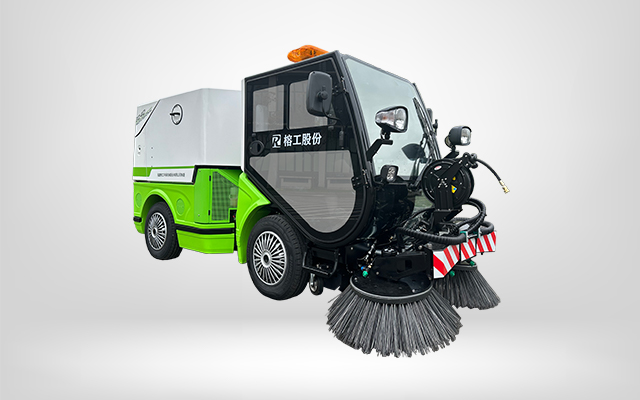
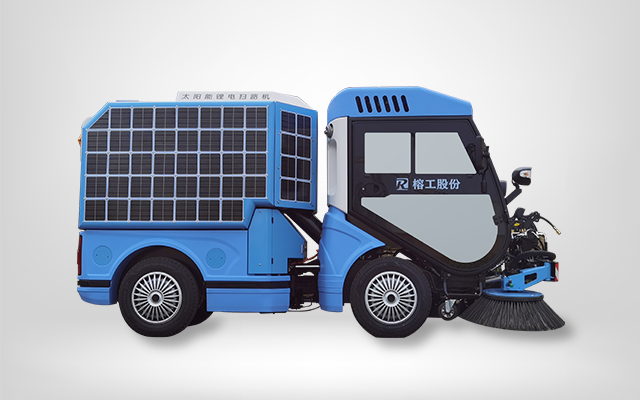
As mentioned, the single most impactful feature for reducing maintenance is an all-electric powertrain. This design choice completely eliminates the most maintenance-intensive component of a traditional sweeper: the internal combustion engine. An electric machine has no engine oil to change, no fuel filters to replace, no coolant system to service, and no complex exhaust after-treatment system to maintain. The electric motors themselves are sealed and require virtually no routine maintenance. This is the ultimate low-maintenance design.
The most frequently performed maintenance tasks on a sweeper are the cleaning of the filters and the replacement of the worn brushes. A key feature of low maintenance street cleaning machines is the ability for these tasks to be performed quickly and without the need for special tools.
A complex machine like a street sweeper has many different pivot points and bearings that require regular lubrication, or greasing, to prevent premature wear. On a poorly designed machine, a mechanic may have to spend a significant amount of time locating and accessing a dozen or more individual grease fittings. This is a task that can easily be rushed or missed.
A superior, low-maintenance design will incorporate an automatic or a centralized lubrication system. An automatic system periodically injects a measured amount of grease into all the critical points. A centralized system groups all the grease fittings into a single, easy-to-access manifold. Both of these solutions ensure that this vital task is done correctly and consistently.
Modern street sweepers are complex machines with sophisticated electronic control systems. Smart technology can be a powerful tool for simplifying the maintenance of these systems. Onboard diagnostic systems are a key feature. When a fault occurs, the system can display a simple error code that tells a technician the exact nature and location of the problem. This eliminates guesswork and dramatically reduces troubleshooting time.
Telematics systems can take this a step further. They can remotely transmit these fault codes and other machine health data back to the fleet manager. This enables a proactive approach, where a service appointment can be scheduled and the right parts can be ordered before the machine even returns to the workshop.
The decision to invest in low maintenance street cleaning machines should be part of a broader, strategic approach to fleet management. It is a decision that is supported by and integrated with the choice of supplier and the overall fleet acquisition strategy.
When your goal is to acquire low-maintenance and high-efficiency equipment, it is essential to partner with a supplier who shares those priorities. A top-tier high-efficiency road sweeper supplier will be a true consultant. They will focus their sales process not on flashy features, but on the machine’s Total Cost of Ownership. They will also provide comprehensive, factory-certified training for your in-house mechanics, empowering them to maintain the equipment to the highest standard.
For an organization that wants the ultimate low-maintenance solution, the answer is often to outsource the maintenance function completely. This can be achieved through a full-service lease, where the leasing company takes on all responsibility for maintenance and repairs for a fixed monthly fee.
An even more comprehensive solution is to hire a full-service contractor. When you use contract road cleaning machines, the contractor provides the machine, the operator, and all the maintenance. The client is simply paying for a guaranteed clean street. This completely eliminates the maintenance burden. Your street cleaning equipment supplier can often advise on these different models.
Another strategic way to reduce the overall maintenance burden of a fleet is to reduce the total number of machines in it. A multifunctional street sweeper machine can help to achieve this. A sweeper that is also equipped with a high-pressure washing system or a catch basin cleaner can perform the job of two or three separate vehicles. A single, versatile machine means there is one less engine to service, one less set of tires to maintain, and one less vehicle to store and insure.
The entire history of the Street sweeper is a story of a relentless drive for greater reliability and efficiency. The earliest motorized sweepers were complex and prone to breakdowns. Over the decades, engineers have continuously refined the designs to make them more robust and dependable. The modern focus on creating low maintenance street cleaning machines is the latest and most sophisticated chapter in this long evolutionary story.
For any fleet manager whose primary goals are to maximize equipment uptime and minimize long-term costs, the choice is clear. A focus on acquiring low maintenance street cleaning machines is a strategic imperative. By prioritizing a design philosophy of simplicity, durability, and easy access, and by looking for specific features like electric power and tool-free service points, a buyer can secure a fleet of machines that are not just effective, but are also reliable and cost-efficient assets for years to come.
This is the first one.