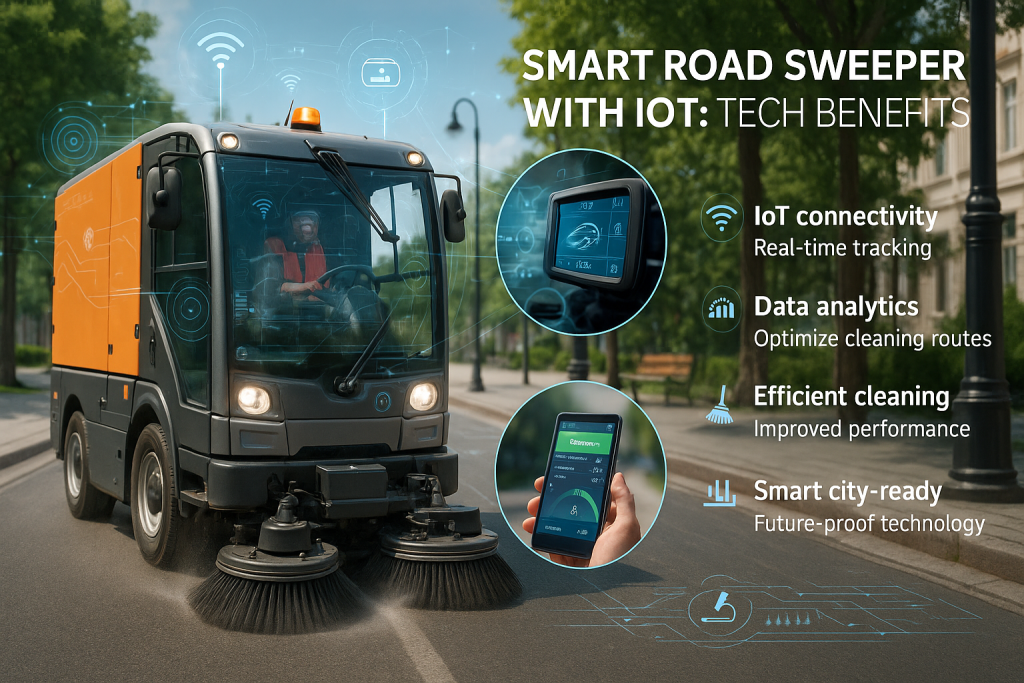
A smart road sweeper with IoT is a powerful example of data-driven technology revolutionizing urban maintenance. The integration of the Internet of Things (IoT) connects the physical cleaning machine to a sophisticated digital management system, transforming it from a simple piece of hardware into an intelligent, connected asset. This connectivity unlocks unprecedented levels of efficiency, reliability, and strategic insight, fundamentally changing the way cleaning operations are managed. For any public works department or large-scale facility manager, understanding the significant tech benefits of a smart road sweeper with IoT is the first step toward a more effective and intelligent future. This guide will provide a detailed overview of this transformative technology.
To appreciate the benefits of a smart road sweeper with IoT, it is helpful to first understand the core technology itself. The Internet of Things is a concept that has become central to many modern industries, and its application in the world of street cleaning is a powerful example of its practical value.
At its heart, the Internet of Things is a network of physical objects—in this case, road sweepers—that are embedded with sensors, software, and other technologies for the purpose of connecting and exchanging data with other devices and systems over the internet. In simpler terms, it gives a physical machine a digital voice. It allows the sweeper to report on its own status, its location, and its environment in real time. This constant flow of information is what makes the machine “smart.”
A smart road sweeper with IoT is a system composed of three essential components working together. The first is the “Thing” itself: the physical road sweeper. This machine is equipped from the factory with a variety of specialized sensors and an onboard communications module, often using a cellular connection.
The second component is the Network. This is the invisible infrastructure, the cellular or Wi-Fi network, that allows the sweeper to transmit the data it collects from its sensors up to the cloud. The third and final component is the Platform. This is the cloud-based software application, a central dashboard that the fleet manager uses. The platform receives, processes, analyzes, and visualizes all the data from the fleet, turning raw numbers into actionable intelligence.
When these components are brought together, the road sweeper is transformed. It is no longer an isolated machine operating independently. It becomes a fully integrated mobile data point within a larger management ecosystem. The fleet manager in the office has a live, digital connection to every machine out in the field. This is the foundational principle of any modern high-tech street sweeper machine. The machine can report what it is doing, where it is doing it, and how it is feeling, all in real time.
The most immediate and impactful tech benefit of a smart road sweeper with IoT is a dramatic improvement in day-to-day operational efficiency. The real-time data provided by the system allows for smarter decisions, reduced waste, and a higher level of productivity from the entire fleet.
The most basic yet powerful feature of an IoT system is live GPS tracking. A fleet manager can look at a digital map on their computer screen and see the exact, real-time location of every single sweeper in their fleet. This complete visibility is a game-changer for dispatching and coordination. If an urgent cleanup request comes in, the manager can instantly identify the closest available unit and dispatch it to the location.
This real-time tracking also serves as an invaluable tool for proof of service. The system creates a digital record, or “breadcrumb trail,” of every street that has been cleaned. This can be used to verify that all scheduled routes have been completed and to provide documented evidence of service in response to any citizen inquiries or complaints.
The data from a smart road sweeper with IoT can be fed into powerful artificial intelligence (AI) algorithms to create mathematically optimized cleaning routes. A human scheduler can create a good route, but an AI can create a perfect one. The algorithm can analyze dozens of variables simultaneously, including the list of streets to be cleaned, real-time traffic conditions, the sweeper’s current location, its fuel or battery level, and the distance to the nearest disposal site.
The result is a route that minimizes travel time, reduces fuel consumption, and lowers overall wear and tear on the vehicle. This AI-powered optimization ensures that the fleet is operating at its absolute peak efficiency, which translates directly into significant savings on fuel and labor costs.
The traditional model of street cleaning is based on a rigid, fixed schedule. This is inherently inefficient, as it often results in cleaning streets that are not dirty while leaving other, more problematic areas waiting for their scheduled day. A smart road sweeper with IoT is a key enabler of a more efficient, on-demand cleaning model.
Because the fleet’s location and status are always known, units can be dynamically dispatched to respond to real-time needs. A cleaning task can be triggered by a report from a citizen via a city app, by an alert from a smart waste bin, or by a request from another city department. This agility is a core component of broader smart city road sweeper solutions.
One of the biggest hidden costs of managing a fleet is unexpected equipment downtime. A smart road sweeper with IoT provides a powerful tech benefit that directly addresses this problem: the shift from reactive repairs to proactive, predictive maintenance.
The old model of maintenance is a reactive one: you wait for a machine to break, and then you fix it. This approach is inefficient and costly. It leads to unexpected downtime, which disrupts cleaning schedules, and it often means that a small, inexpensive problem has been allowed to escalate into a major, expensive failure.
The smart model is a proactive one. The IoT sensors on the sweeper are constantly monitoring the health of the machine’s critical systems. The platform can analyze this stream of data to identify the early warning signs of a potential failure, often weeks before it would become apparent to an operator. This is a primary benefit of a full road sweeper IoT integration.
A smart road sweeper with IoT is constantly reporting on its own internal health. The sensors track a wide variety of key data points that are indicators of the machine’s condition.
The predictive maintenance process is data-driven. The IoT platform establishes a baseline of normal operating parameters for each machine. It then uses machine learning algorithms to constantly monitor the live data stream for any deviations from this baseline. For example, it might detect a subtle but persistent increase in the machine’s average hydraulic fluid temperature.
This anomaly would trigger an automatic alert to the maintenance team. The alert would specify the machine and the nature of the potential problem. This allows the maintenance team to schedule an inspection and address the underlying issue—perhaps a small hydraulic leak or a failing cooler fan—before it can lead to a catastrophic failure of the entire hydraulic system.
The financial benefit of this proactive approach is immense. By preventing unexpected breakdowns, predictive maintenance dramatically increases the uptime and availability of the fleet. A machine that is consistently on the road is a machine that is providing value. The reduction in emergency, overtime repairs and the avoidance of major component failures also leads to a significant reduction in the total maintenance budget over the life of the machine.
A smart road sweeper with IoT does more than just clean the streets; it collects valuable data about the urban environment. This data can be analyzed to provide strategic insights that can help a city or a large facility to manage its resources more effectively.
As the sweeper performs its daily routes, it can be used as a mobile data collection platform. With the right sensors, it can gather information that goes far beyond its own operational status. Advanced debris sensors can estimate the volume and even the type of waste being collected from different areas. This can be used to create a “dirt map” of the city, identifying litter hot spots.
Some advanced systems can use cameras and AI to identify and log the GPS coordinates of infrastructure defects, such as potholes, damaged signs, or faded road markings. This turns the sweeper into a valuable asset for the entire public works department.
Over weeks and months, the IoT platform accumulates a rich historical dataset. This data can be analyzed to identify long-term trends. A fleet manager can see which routes consistently take longer to clean or which areas consistently generate the most debris. This strategic intelligence allows for better long-term resource allocation. It might lead to a permanent change in the cleaning schedule or the assignment of a larger machine to a particularly challenging route. This data is also an invaluable tool for justifying budget requests and for demonstrating the effectiveness of the cleaning program.
The data from a smart road sweeper with IoT can also be used to enhance the performance and safety of the operators. The system can monitor operator behavior, tracking metrics such as vehicle speed, idle time, and instances of harsh braking or acceleration. This data is not used in a punitive way, but rather as a tool for targeted training and coaching. It can help to identify operators who may need additional training on efficient driving techniques, which can lead to significant savings on fuel and wear and tear.
The integration of IoT is not an end in itself; it is a foundational technology that enables an even more advanced and intelligent future for street cleaning. It is the first step on the path to a fully connected and autonomous operation.
The rich, real-time data and the constant connectivity provided by an IoT system are the essential prerequisites for a fully autonomous sweeper. A self-driving vehicle needs to know its exact location (from GPS), it needs to “see” its environment (from other sensors), and it needs to know where it is supposed to go (from a digital route plan). An IoT-enabled sweeper already has this entire digital framework in place. Therefore, a smart sweeper is the logical first step on the path toward a fully autonomous road sweeper.
The ultimate potential of a smart road sweeper with IoT is realized when it is integrated into a broader smart city ecosystem. The sweeper can become a node in a city-wide network. It can communicate with other smart systems, such as connected traffic lights, to receive a “green wave” for smoother passage. It can receive data from smart waste bins to be dispatched dynamically to areas with a high concentration of litter. This creates a truly integrated, responsive, and highly efficient urban management system.
The integration of IoT is the latest and one of the most transformative chapters in the long history of the Street sweeper. From its humble, horse-drawn origins to the powerful mechanical machines of the 20th century, the sweeper has always evolved to incorporate the latest technology. The current shift to a connected, data-driven, intelligent machine is the next logical step in that evolutionary story.
A smart road sweeper with IoT is a powerful investment in the future of intelligent public and private sector cleaning operations. It transforms the sweeper from a standalone piece of hardware into a smart, data-generating asset. The proven tech benefits in the areas of operational efficiency, proactive maintenance, and strategic data analysis deliver a compelling return on investment. It is the key to creating a cleaning program that is not just more effective, but also more intelligent.
This is the first one.